Home Guide
How to Remove Hard Water Stains in a San Diego Bathroom
Written by The Rekoh team · · 4 min read
Quick answer
Hard water stains on San Diego showers, faucets, and glass usually come off with white vinegar and a little scrubbing time. Soak a paper towel or cloth in undiluted white vinegar, press it against the stained surface for 15 to 30 minutes, then scrub with a non-scratch pad and rinse. For heavier buildup, a paste of baking soda and vinegar gives more scrubbing power.
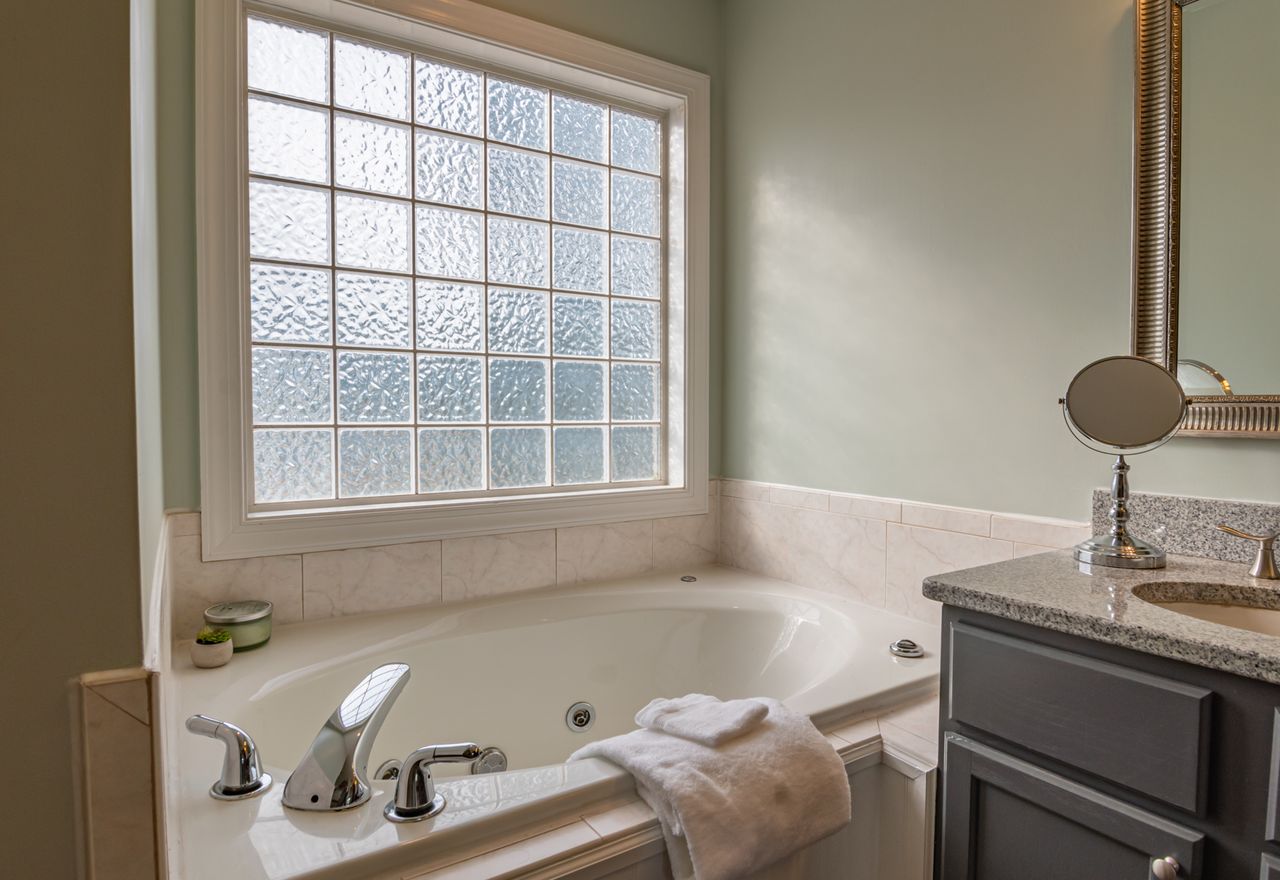
If you live in San Diego, you've probably noticed the white, chalky buildup on your shower glass, faucets, and shower head, even when you clean often. That's not a sign you're doing something wrong. San Diego's water is genuinely hard: the City's 2025 water quality report puts it at about 14 grains per gallon, or roughly 240 parts per million, which lands in the "very hard" range. That means it carries more dissolved calcium and magnesium than water in a lot of other cities, and those minerals are what's left behind on your surfaces after the water dries.
Why hard water stains happen here
Every time water evaporates off a surface, whatever minerals were dissolved in it stay behind. In softer water, that residue is minimal. In San Diego, the mineral content is high enough that it builds up fast, especially on glass shower doors, chrome fixtures, and shower heads, since those get hit with water daily and dry in place.
The fix: white vinegar first
White vinegar is acidic enough to dissolve mineral deposits without damaging most bathroom surfaces.
- Soak a paper towel, cloth, or cotton pad in undiluted white vinegar.
- Press it directly against the stained area, glass, faucet, or shower head.
- Let it sit for 15 to 30 minutes. For heavier buildup, leave it closer to an hour.
- Scrub gently with a non-scratch sponge or pad.
- Rinse thoroughly with water.
For tougher, older buildup
If vinegar alone isn't cutting through it, mix baking soda with a small amount of vinegar until it forms a paste. Apply the paste directly to the stain, let it sit for a few minutes while it fizzes, then scrub and rinse. The combination gives you more scrubbing texture than vinegar alone.
Hard water shows up in more than just your shower
Stains on glass and chrome are the most visible sign, but hard water builds up anywhere water sits and dries. Faucets and shower heads can slow down as mineral deposits clog the small openings, sometimes fixable by unscrewing the shower head and soaking it in vinegar the same way you'd treat glass. Coffee makers and electric kettles build up scale on the inside too, usually solved by running a cycle of equal parts water and vinegar through them every month or so. Glass shower doors just show it first because they're the surface you look at every day.
What to avoid
- Don't use vinegar on natural stone counters or floors, marble, granite, and similar surfaces can etch or dull from the acid.
- Don't scrub with anything abrasive on glass or chrome, it can scratch the surface and make future buildup stick even faster.
- Don't let vinegar sit for hours unattended on rubber seals or grout, it can wear them down over time.
Keeping stains from coming back
A quick daily habit makes the biggest difference: squeegee glass shower doors after every shower, and wipe down faucets with a dry cloth after use. It takes fifteen seconds and prevents most of the buildup before it starts.
If hard water stains keep coming back no matter what you try, or you're dealing with buildup in spots that are hard to reach on your own, that's the kind of detail-oriented work neighbors already recommend cleaners for on Rekoh. University Heights residents, for example, have specifically praised Bomi Cleaning and Stephanie S. for catching the spots most people miss.
When it's more than a quick fix
Some buildup responds to vinegar in one pass. Some has been building for years, especially in a home you just moved into, or a bathroom nobody's deep cleaned in a while, and that takes real time and repeat treatment to fully clear. That's normal, it doesn't mean you're doing it wrong, it just means it's more of a project than a Saturday afternoon task.
If that's where you're at, this is exactly the kind of detail-oriented work neighbors already vouch for on Rekoh. University Heights residents, for example, specifically called out Bomi Cleaning and Stephanie S. for catching buildup in the spots most people miss. You can see their profiles and reach out directly, no bidding, no lead forms, just a recommendation from someone who's already had the work done.
Common questions
What causes hard water stains in San Diego homes?
San Diego's tap water averages about 14 grains per gallon of hardness, roughly 240 parts per million, according to the City's 2025 Annual Drinking Water Quality Report. Anything above 10.5 grains per gallon counts as very hard. That mineral content is mainly calcium and magnesium, and when the water evaporates off glass, chrome, or tile, the minerals stay behind as a chalky white residue.
Does vinegar damage bathroom surfaces?
White vinegar is safe for glass, chrome, and most sealed tile, but it shouldn't be used on natural stone like marble or granite, since the acid can etch and dull those surfaces over time.
How long should vinegar sit on a hard water stain before scrubbing?
15 to 30 minutes for most buildup. For heavier, older stains, letting it sit closer to an hour gives the acid more time to break down the minerals before you scrub.
How can I prevent hard water stains from coming back?
Squeegee glass shower doors after each use and dry faucets with a cloth after washing. Both habits remove water before it has a chance to evaporate and leave mineral residue behind.